
How to read a Prosecco label
How to read a Prosecco label: DOC or DOCG, Superiore, Millesimato, Brut or Extra Dry, the neck seal and the US import details.

The short answer. Start with the appellation: Prosecco DOC, or one of the two Prosecco Superiore DOCG hill zones. Then find the sweetness word: Brut is dry, Extra Dry is slightly sweet. A year means Millesimato, a vintage. The back label names who made or bottled it, and US law adds the importer, alcohol and a sulfite warning.
Everyone knows the move. You stand at the Prosecco shelf, pick the bottle with the nicest label, and feel briefly like a person who knows things. The trouble is that the biggest word on the front is the brand, which is the one word the law barely cares about. Everything that actually tells you what is inside sits in smaller type. The big print is marketing. The small print is the law.
New to all this? Start with What is Prosecco?

DOC or DOCG: where it's from
This line matters most. Prosecco DOC means the grapes came from the large zone across nine provinces of the Veneto and Friuli Venezia Giulia. It is most of what Americans drink. Prosecco DOC Treviso is still DOC, just narrower: grown, made and bottled in that province.
Conegliano Valdobbiadene Prosecco Superiore DOCG and Asolo Prosecco Superiore DOCG are the two smaller hill zones in Treviso, with stricter rules. Neither word tells you how the wine tastes. The map is in DOC vs DOCG.
Why doesn't my bottle say Prosecco?
Because it doesn't have to. On sparkling DOCG wines, the rules allow Prosecco and Superiore to be left off, so a bottle that just says Valdobbiadene DOCG is still Prosecco. When Prosecco does appear, it must follow the place name, printed no larger. It's the one label that is modest on purpose.
The words that come with the hills
| On the label | What it means |
|---|---|
| Superiore | Belongs to the two DOCGs. On a DOC bottle, read it again. |
| Rive di + a place | Grapes from one of 43 named towns or hamlets in Conegliano Valdobbiadene, picked by hand, with the vintage on the label |
| Superiore di Cartizze | A single famous hill in Valdobbiadene, about 107 hectares |
| Millesimato + a year | At least 85% of the wine is from that year |
| Spumante | Fully sparkling, which is most of what's sold in the US |
| Frizzante | Gently sparkling |
| Sui lieviti | Refermented in its own bottle with the yeast left in, so cloudy on purpose |
Every Prosecco DOC Rosé must carry Millesimato, which is why you never see a pink Prosecco without a year. More in Prosecco Rosé.
The sweetness word runs backwards
Each sweetness word is a legal sugar range set by EU law. Brut is dry, under 12 grams per liter. Extra Dry is slightly sweet, 12 to 17. Dry is sweeter, 17 to 32. We didn't design this. We just live with it. The full ladder is in Is Prosecco sweet?
Who actually made it?
Turn the bottle around. Under EU rules, a sparkling wine names its producer, the company that made it sparkle: prodotto da. A business that only sells it is the vendor, venduto da. On frizzante the key name is the bottler. Imbottigliato da means bottled by. Imbottigliato per means bottled for this company, by someone else.
Sometimes a name is replaced by a code from Italy's fraud authority, the ICQRF: province initials (TV for Treviso), a number and IT. It's legal, and allowed only if another business in the chain is named in full. It isn't a sign of bad wine. It just means the label is being discreet about who did the work. To look up a name, try the Prosecco Reviews producer directory.
The strip around the neck
DOCG bottles carry a state-issued strip on the neck with a series and number, which traces the bottle through official records. In November 2025 the Prosecco DOC consortium became the first to use a new tricolor state seal with a QR code, printed by Italy's state mint, linking to official information on where the wine came from. If a "Prosecco" has no appellation line at all, be suspicious.
The American back label
US law adds its own facts, set by the Alcohol and Tobacco Tax and Trade Bureau (TTB) and Customs, often on a sticker over the Italian back label:
- Imported by, with the importer's name and US address. US rules don't require the Italian producer's name, which is why the Italian line matters.
- Alcohol by volume. At 14% or less, the stated figure may be off by 1.5 percentage points either way.
- Contains sulfites, required at 10 parts per million or more. Nearly all wine qualifies.
- The Government Warning, required by a 1988 federal law.
- Country of origin, such as Product of Italy, and the net contents, almost always 750 mL.
The importer's name is how you find the bottle again, with our guide to where to buy Prosecco in the US. Every term here is in the glossary.
Want the full story? Read the complete guide on prosecco.com: what the Prosecco legal label tells you.
Our own wine
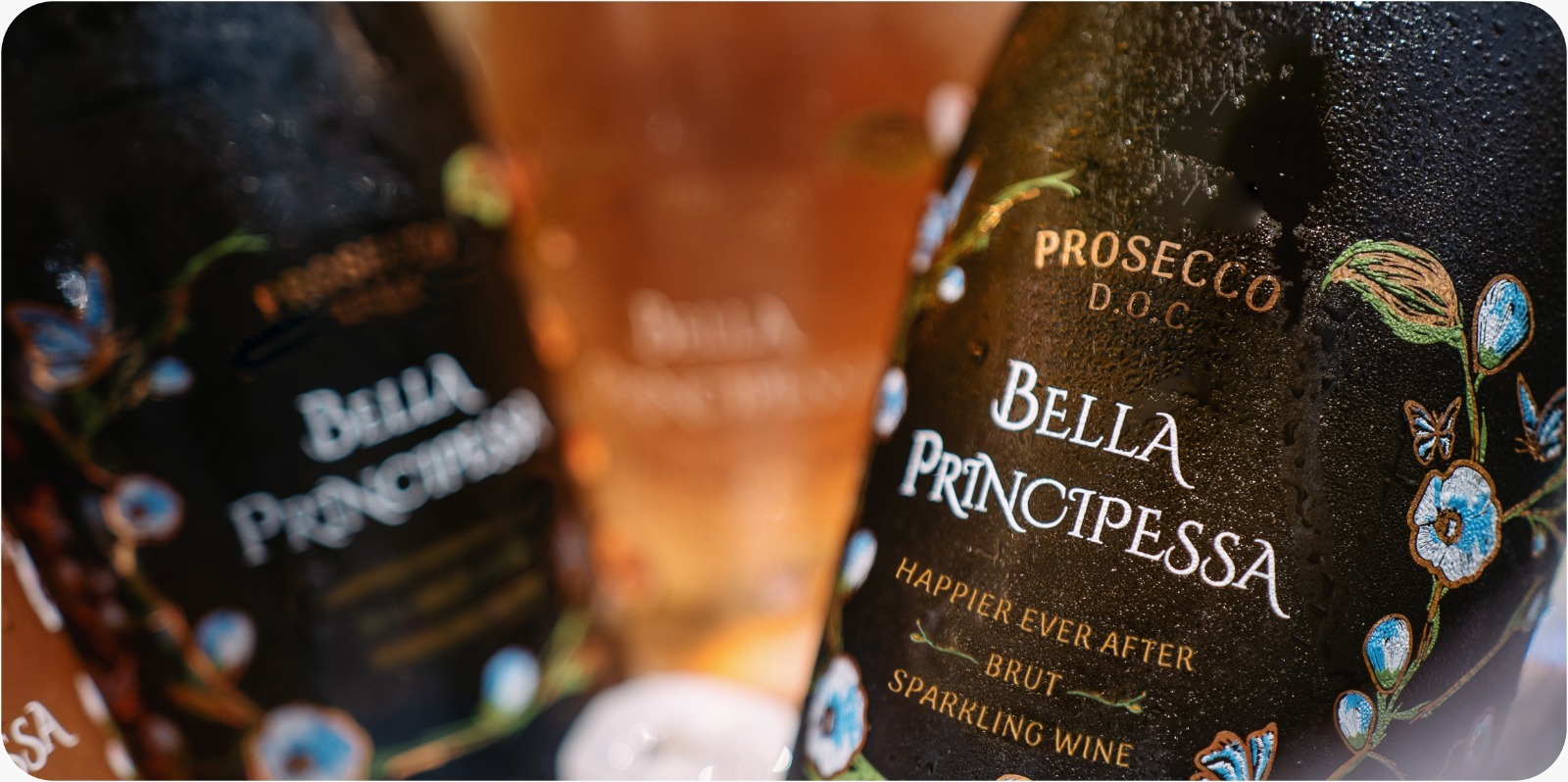
Bella Principessa Prosecco
Bella Principessa Prosecco DOC and Bella Principessa Prosecco DOC Rosé, both Brut, in a hand-painted bottle. Made by the team behind this site.
Meet Bella Principessa Where to buy Prosecco in the USQuick answers
What does Millesimato mean? Vintage. At least 85% of the wine comes from the year printed on the label. Every Prosecco DOC Rosé carries one.
What does "imbottigliato per" mean? Bottled for. Another business bottled the wine for the company named on the label.
What is the code on the back of a Prosecco label? Usually an ICQRF code: province initials, a number and IT. It stands in for one business in the supply chain.
Sources
- Production regulations, Conegliano Valdobbiadene Prosecco DOCG (English text, December 2018: Art. 4, 5, 7, Attachment A)
- Disciplinare, Asolo Prosecco DOCG (Art. 5 and 7)
- Consorzio Prosecco DOC: rules summary and disciplinare (PDF)
- Commission Delegated Regulation (EU) 2019/33: Annex III, Article 46 and Article 47
- Gambero Rosso: ICQRF code versus ISTAT code
- QuiFinanza, 23 November 2025 and Dissapore, 21 November 2025 (the new state seal)
- TTB: labeling requirements for imported wine; eCFR 27 CFR 4.32, 4.35, 4.36; 27 CFR part 16 (health warning); 19 CFR part 134 (country of origin)
Last checked: October 2026
The Prosecco Desk: the Proseccotists behind Bella Principessa Prosecco. We love this region and write about it plainly. No producer pays to be mentioned.
Featured Prosecco

Bella Principessa Prosecco
Best Prosecco Rosé

Bella Principessa Prosecco
Best Prosecco DOC

Signorina Prosecco
Write a comment
Post a Comment