
Is Prosecco sweet?
Is Prosecco sweet? Brut is dry, Extra Dry is a little sweet, Dry is sweeter. The full sugar scale in plain English, and which one to buy.

The short answer. It depends on one small word on the label. Brut Prosecco is dry. Extra Dry is slightly sweet, despite its name. Dry is sweeter still. So if you want a dry Prosecco, look for Brut, or Extra Brut and Brut Nature for even less sugar. Most Prosecco on US shelves is Brut or Extra Dry.
Somewhere in Europe, a long time ago, a committee decided that "extra dry" should mean "a bit sweet" and that "dry" should mean "sweeter than that." We were not consulted. Neither were you. And so every week, all over America, someone who hates sweet wine confidently picks up a bottle that says Extra Dry, takes one sip at a dinner party, and quietly wonders whether her taste buds have betrayed her.
They haven't. The label did.
The words are numbers in disguise
Every sweetness word on a bottle of Prosecco is a legal category with a sugar range attached, set by European Union law for all sparkling wine, Champagne included. The sugar is measured in grams per liter. Here's the whole ladder, driest at the top:
| The label says | Sugar per liter | Sugar in a 5 oz glass | What it tastes like |
|---|---|---|---|
| Brut Nature | under 3 g | under half a gram | Bone dry. Crisp, almost austere. |
| Extra Brut | 0 to 6 g | under 1 g | Very dry and sharp. |
| Brut | under 12 g | up to about 2 g | Dry. The classic food Prosecco. |
| Extra Dry | 12 to 17 g | about 2 to 2.5 g | Off-dry. Soft, round, a little sweet at the end. |
| Dry | 17 to 32 g | about 2.5 to 5 g | Noticeably sweet and fruity. |
| Demi-Sec | 32 to 50 g | about 5 to 7.5 g | Sweet. Dessert territory. |
The glass column is our math for a 5 oz pour. A teaspoon of sugar is about 4 grams, so even a glass of Dry has about a teaspoon. Prosecco is not a soda.

Two small print items. The law lets the real sugar differ from the label by up to 3 grams per liter, and the dry ranges overlap a little, so the producer picks which word to use. Treat the boundaries as guidelines with a little give, not walls.
Why does Extra Dry taste sweet?
Because the names are old trade vocabulary, from the 1800s, when Champagne drinkers expected their bubbly sweet. Next to that, a wine with a lot less sugar really was "extra dry." Then tastes got drier still, and the trade needed a new word for drier than extra dry. It picked "brut," French for raw or untamed. The old words never moved. The EU simply pinned numbers to them, and the numbers are what you should believe.
There's a twist for Prosecco. Extra Dry isn't a mistake here; it's the tradition. The Prosecco DOC consortium describes Extra Dry as the traditional style and Brut as the modern one. Glera, the Prosecco grape, has bright acidity and soft, pear-and-apple fruit, so a few grams of sugar make it taste round and generous rather than sugary. That fruit also fools you: a ripe, pear-scented Brut can taste sweeter than it is. Plenty of people who say they hate sweet wine love Extra Dry. They just don't know that's what they're drinking.
So here's our advice, and it's the whole point of this page: stop ordering Prosecco by the word "dry." Order by the word on the label, and now you know what each one means.
Which one should you buy?
Start with what you're doing, not with the word.
- With dinner, especially seafood, sushi or anything fried: Brut. If you like your wine sharp and your opinions sharper, Extra Brut.
- On its own, with chips, olives or prosciutto: Extra Dry. This is the aperitivo Prosecco, and the salt loves it.
- In a Spritz or a mimosa: Brut keeps the drink drier; Extra Dry makes it softer and juicier. There is no wrong answer, only brunch.
- With dessert, or for someone with a sweet tooth: Dry. Yes, the sweet one is called Dry. We warned you.
- For the friend who announces that all Prosecco is sweet: Brut Nature. Then say nothing. Let the wine talk.
One more thing. DOC or DOCG on the label tells you where the wine is from, not how sweet it is. Either can be Brut or Extra Dry. Always read the small word. If you want to know where it sits on the bottle, see how to read a Prosecco label.
And the calories?
Sugar is only a small part of the calories in any wine; most come from the alcohol. A dry Brut has a little less sugar than an Extra Dry, but the difference per glass is around a gram. If calories are your question, prosecco.com has a straight answer on calories in Prosecco.
Want the full story? Read the complete guide on prosecco.com: the sweetness levels of Prosecco.
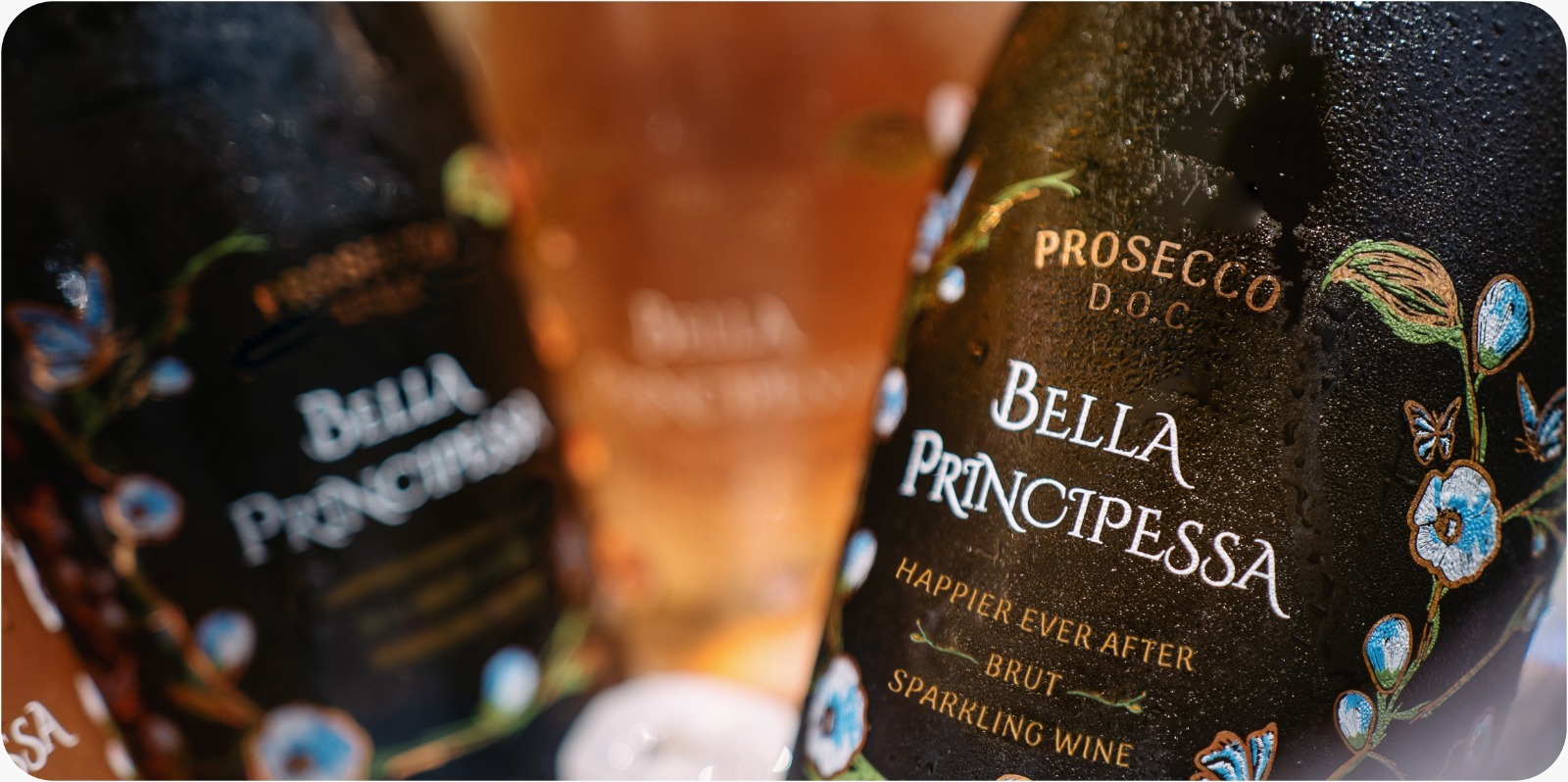
Our own wine
Bella Principessa Prosecco: Brut, both of them
Bella Principessa Prosecco DOC and Bella Principessa Prosecco DOC Rosé are both Brut: dry, crisp, made by the team behind this site, in a hand-painted bottle.
Meet Bella Principessa Where to buy Prosecco in the USQuick answers
Is Extra Dry Prosecco sweet? Slightly. Extra Dry means 12 to 17 grams of sugar per liter: sweeter than Brut, drier than Dry. Most people taste it as off-dry.
Which is drier, Brut or Extra Dry? Brut. The names run backwards: Brut Nature, Extra Brut and Brut are all drier than Extra Dry.
What is the driest Prosecco? Brut Nature, with under 3 grams of sugar per liter and no sugar added after the second fermentation.
Is DOCG Prosecco sweeter than DOC? Not by rule. DOC and DOCG describe where the wine is from. Check the sweetness word on the label.
Sources
- Commission Delegated Regulation (EU) 2019/33, Article 47 and Annex III (sweetness terms and the 3 g/l tolerance)
- Prosecco DOC disciplinare, Conegliano Valdobbiadene DOCG disciplinare, Asolo DOCG disciplinare (AIS copies)
- Consorzio Prosecco DOC, technical sheet for sommeliers (Extra Dry "traditional", Brut "modern")
- USDA FoodData Central: granulated sugar, about 4 g per teaspoon
- The Philadelphia Inquirer: Who put the "brut" in Champagne? (why the names run backwards)
Last checked: October 2026
The Prosecco Desk: the Proseccotists behind Bella Principessa Prosecco. We love this region and write about it plainly. No producer pays to be mentioned.
Featured Prosecco

Bella Principessa Prosecco
Best Prosecco Rosé

Bella Principessa Prosecco
Best Prosecco DOC

Signorina Prosecco
Write a comment
Post a Comment