
The short answer. Prosecco tastes light, fresh and fruity. The Prosecco DOC consortium lists green apple, lemon and pear, with white flowers such as acacia and wisteria, carried by fine, gentle bubbles and lively acidity. It has none of Champagne's toasty, bready notes, and how sweet it tastes depends on one word on the label.
Ask a table of friends what Prosecco tastes like and the first answer is "bubbly," which is true and also what a six-year-old would say about root beer. Then someone says "cheap Champagne," someone else says "sweet," and the conversation moves on to the crab dip. Most of us have drunk a lot of Prosecco without anyone telling us what to notice. So here's the thing nobody at the table will say: with Prosecco, the most important tasting note is the date.
The official tasting note
We won't hand you our own adjectives. The people who write the rules have already published theirs. The Consorzio Prosecco DOC, the producers' body for the main appellation, describes the aromas as white flowers and fruit: acacia, wisteria, jasmine and a shade of white rose. For fruit it names green apple and lemon, and its Italian information sheet adds peach and pear with a light citrus edge.
In the glass, the Consorzio says, the color is pale yellow with greenish reflections. In the mouth, it describes bright, lively acidity in a soft structure, and a finish where the flowers and fruit linger with a little sweetness.
No oak, no butter, no toast. If your Prosecco smells mostly of "wine," something is off.
What do the bubbles feel like?
The Consorzio calls the bubbles fine and persistent and the fizz "pleasant and caressing," "never aggressive." That's a fair description of good manners in general. Fully sparkling Prosecco (spumante) is the bottle with the wire cage. Frizzante is gently sparkling, between 1 and 2.5 bar of pressure under EU rules, so it feels softer on the tongue.
The texture starts with the grape. The Consorzio describes Glera as moderate in sugar, high in acidity and delicate in aroma. That acidity is the crunch you feel behind the fruit. By law, sparkling Prosecco DOC has at least 11% alcohol, so it reads as light rather than heavy.
Is it sweet?
It can taste sweeter than it is, because the fruit is so forward. Then the label adds its own twist. Brut has under 12 grams of sugar per liter and tastes dry. Extra Dry has 12 to 17 grams and tastes soft and slightly sweet, despite the name. The Consorzio calls Extra Dry the traditional style and Brut the modern one, and it describes Dry, the sweeter version, as having more pronounced floral notes.
The word on the label is doing the work. The full ladder is in Is Prosecco sweet?
Why doesn't it taste like Champagne?
Because of where the bubbles are made. Champagne ferments a second time in the bottle and must then wait at least 15 months before sale, much of it on its spent yeast. That's where the brioche and toast come from. Most Prosecco ferments a second time in a sealed steel tank, with short yeast contact, so the grape stays in charge. Prosecco tastes of the fruit. Champagne tastes of the fruit and the waiting room.
The Prosecco rules prove the point themselves. For the old cloudy style that ferments in the bottle and keeps its yeast, the regulations allow notes of bread crust and yeast. Same grape, different method, different taste. The whole process is in how Prosecco is made, and the side-by-side is in Prosecco vs Champagne.
And pink Prosecco?
Prosecco DOC Rosé is Glera with 10% to 15% Pinot Nero. The Consorzio says it keeps the usual Prosecco markers of white flowers, apple and citrus, adds strawberry and raspberry from the Pinot Nero, and feels rounder and softer, with more structure than the white. More in Prosecco Rosé.
Why it should taste fresh
Here's where the date comes in. The Consorzio's own sheet says that a few months after harvest you can expect green apple and lemon, and later yellow apple, grapefruit, sometimes pear, banana and exotic fruit. The Conegliano Valdobbiadene consortium puts it plainly for its wines: they're at their best in the year after the harvest, and over time the aromas move from fruity and floral toward mature and vinous.
Prosecco doesn't improve in your closet. It just gets older, like the rest of us. Buy it for this season, look for a vintage year on the label if there is one, and serve it at about 43 to 46°F (6 to 8°C), the range the Consorzio recommends, in a white wine glass so you can smell the flowers. More in how to serve Prosecco, and every term here is in the glossary.
Want the full story? Read the complete guide on prosecco.com: What does Prosecco taste like?.
Our own wine
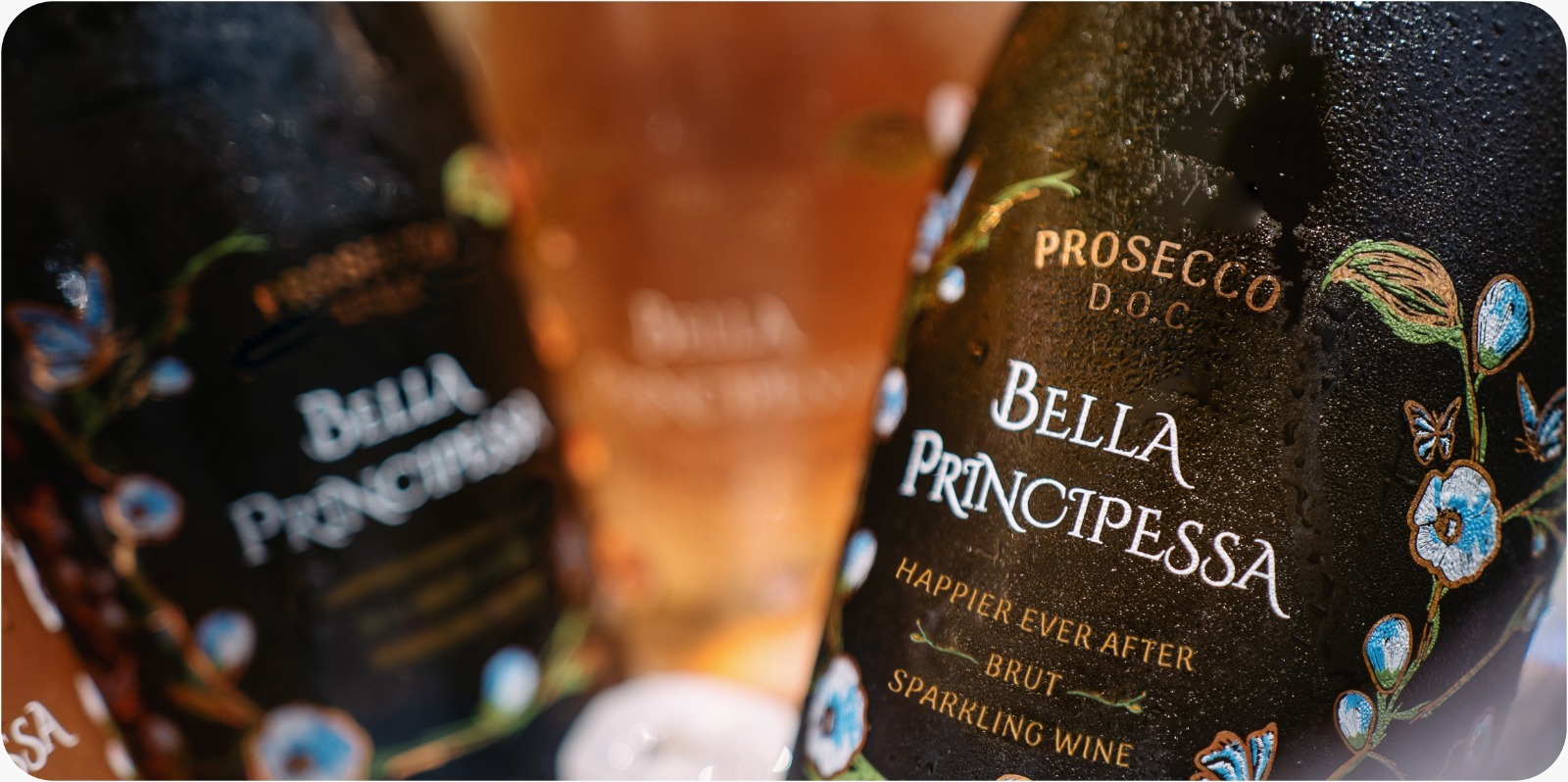
Bella Principessa Prosecco
Bella Principessa Prosecco DOC and Bella Principessa Prosecco DOC Rosé, both Brut, in a hand-painted bottle. Made by the team behind this site.
Meet Bella Principessa Where to buy Prosecco in the USQuick answers
Does Prosecco taste like Champagne? Not really. Prosecco is fresh and fruity, with green apple, pear and white flowers. Champagne spends much longer on its yeast, which gives it toasty, bready notes.
Is Prosecco fruity or dry? It can be both. The fruit is always forward, but Brut is dry, while Extra Dry and Dry are progressively sweeter. Check the word on the label.
What does Prosecco Rosé taste like? According to the Consorzio, the usual white flowers, apple and citrus, plus strawberry and raspberry from Pinot Nero, with a rounder, softer feel than the white.
Does Prosecco taste better with age? Usually not. It's made to be drunk young, and over time its aromas turn from fruity and floral to more vinous.
Sources
- Consorzio Prosecco DOC: technical sheet for sommeliers (color, perlage, aromas, flavor, styles, serving temperature) and Prosecco DOC and Prosecco DOC Rosé information sheet (Glera, peach and citrus, rosé descriptors)
- Consorzio Conegliano Valdobbiadene Prosecco: Storage and service (best in the year after harvest; aromas evolve)
- Prosecco DOC disciplinare, consolidated to DM 19 June 2023 (AIS copy) (minimum alcohol; bread-crust notes for bottle-fermented frizzante)
- Commission Delegated Regulation (EU) 2019/33, Annex III (sweetness terms)
- Regulation (EU) No 1308/2013, Annex VII Part II (semi-sparkling pressure)
- Comité Champagne: the Champagne appellation factsheet (15-month minimum)
Last checked: October 2026
The Prosecco Desk: the Proseccotists behind Bella Principessa Prosecco. We love this region and write about it plainly. No producer pays to be mentioned.
Featured Prosecco

Bella Principessa Prosecco
Best Prosecco Rosé

Bella Principessa Prosecco
Best Prosecco DOC

Signorina Prosecco
Write a comment
Post a Comment