
How is Prosecco made?
How is Prosecco made? From Glera grapes to the pressurized tank (the Martinotti or Charmat method), plus the cloudy col fondo style.

The short answer. Prosecco starts as Glera grapes from northeast Italy, pressed gently and fermented into a still base wine. For sparkling Prosecco, that wine then ferments a second time in a sealed steel tank, which traps the bubbles. This is the Martinotti, or Charmat, method. The finished wine is filtered and bottled under pressure.
Say "made in the bottle" at a wine bar and people nod as if you've mentioned a good school. Say "made in a tank" and they picture a refinery off the interstate. It's a very American snobbery: anything made one at a time must be better. With Prosecco it gets the story backwards. The tank isn't the shortcut. It's the point.
From vineyard to bottle
1. The grapes. Mostly Glera, at least 85% of the blend. They're picked from late August to early September, says the Consorzio Prosecco DOC, and rushed to the cellar.
2. A gentle press. Soft pressing separates the juice from the skins. The rules cap how much wine the fruit may give: 75 liters per 100 kilos for Prosecco DOC.
3. The first fermentation. Selected yeasts turn the sugar into alcohol at about 18°C (64°F) for 15 to 20 days. The result is a still base wine. For still Prosecco, this is nearly the end.
4. The second fermentation, in the tank. The base wine goes into a sealed steel tank, an autoclave, with yeast and a little sugar or sweet grape must. The yeast makes carbon dioxide, which has nowhere to go but into the wine. The Consorzio sets a minimum of 30 days, or 60 for Prosecco DOC Rosé. Club Oenologique reports two to three months as common.
5. Stopping at the right moment. With the whole batch in one tank, the winemaker can chill it to stop the yeast once the wine reaches its target pressure and sweetness. That's how a Brut and an Extra Dry can come from the same base wine. (Is Prosecco sweet? explains the words.)
6. The check. Before release, the control body Valoritalia checks each batch's paperwork and runs chemical and sensory tests. Only wine that passes gets the State seal numbers for the neck.
7. Bottling. The wine is filtered, bottled under pressure so the bubbles stay put, and rested briefly.
Spumante or frizzante?
It's a question of pressure. Spumante is fully sparkling: EU law requires a quality sparkling wine to reach at least 3.5 bar, and Club Oenologique puts Prosecco generally at 5 bar or more. Frizzante, gently sparkling at 1 to 2.5 bar, is Prosecco with its tie loosened.
By the Consorzio DOC's count, 82% of Prosecco DOC is sparkling, 17% semi-sparkling and 1% still. Spumante must get its bubbles in the tank; frizzante may use the tank or the bottle.
Martinotti or Charmat?
Same method, two names, and the usual custody dispute. Federico Martinotti, an Italian oenologist, developed it in 1895, according to Club Oenologique. The Frenchman Eugène Charmat later patented improved pressure tanks; sources give 1907 or 1910 and don't agree. Italians say Martinotti. Americans usually hear Charmat.
Before the tank, Prosecco sparkled in the bottle. The DOC rules say the region developed natural refermentation from the early 1900s, "first in bottle, then in autoclave."
Why does the tank suit Glera?
The Consorzio describes Glera as moderate in sugar, high in acidity and delicate in aroma, ideal for sparkling wine. Delicate is the key word. Long months on yeast give Champagne its toast and brioche; on Glera that would bury the acacia, wisteria, green apple and pear. A short, cool, sealed fermentation keeps them.
It's also faster, which is part of why Prosecco usually costs less than Champagne. More on that in Prosecco vs Champagne, and on the result in what Prosecco tastes like.
The old cloudy way: col fondo
Col fondo means "with the bottom," and it's that older way. The wine ferments a second time in the bottle you buy, and the spent yeast is never removed. It settles at the bottom, so the wine is often hazy. A few stubborn families never stopped.
That's a traditional name, not a legal category. On a label, look for two other phrases.
Rifermentazione in bottiglia ("refermented in the bottle") appears on Prosecco frizzante made this way. The DOC rules allow the haze, mention possible notes of bread crust and yeast, make the phrase compulsory, and allow a crown cap, like a beer.
Sui lieviti ("on the lees") is a fully sparkling, bottle-fermented type added to the Conegliano Valdobbiadene DOCG rules in 2019: single vintage, at least 90 days on its lees before release.
In these bottles, cloudy is a feature, not a fault. Stand one upright for a while, then pour gently for a clearer glass, or tip it once for the full cloudy version. Ordinary tank-made Prosecco should be clear. More in how to read a Prosecco label.
Want the full story? Read the complete guide on prosecco.com: The bubbly secrets of the Martinotti-Charmat method.
Our own wine
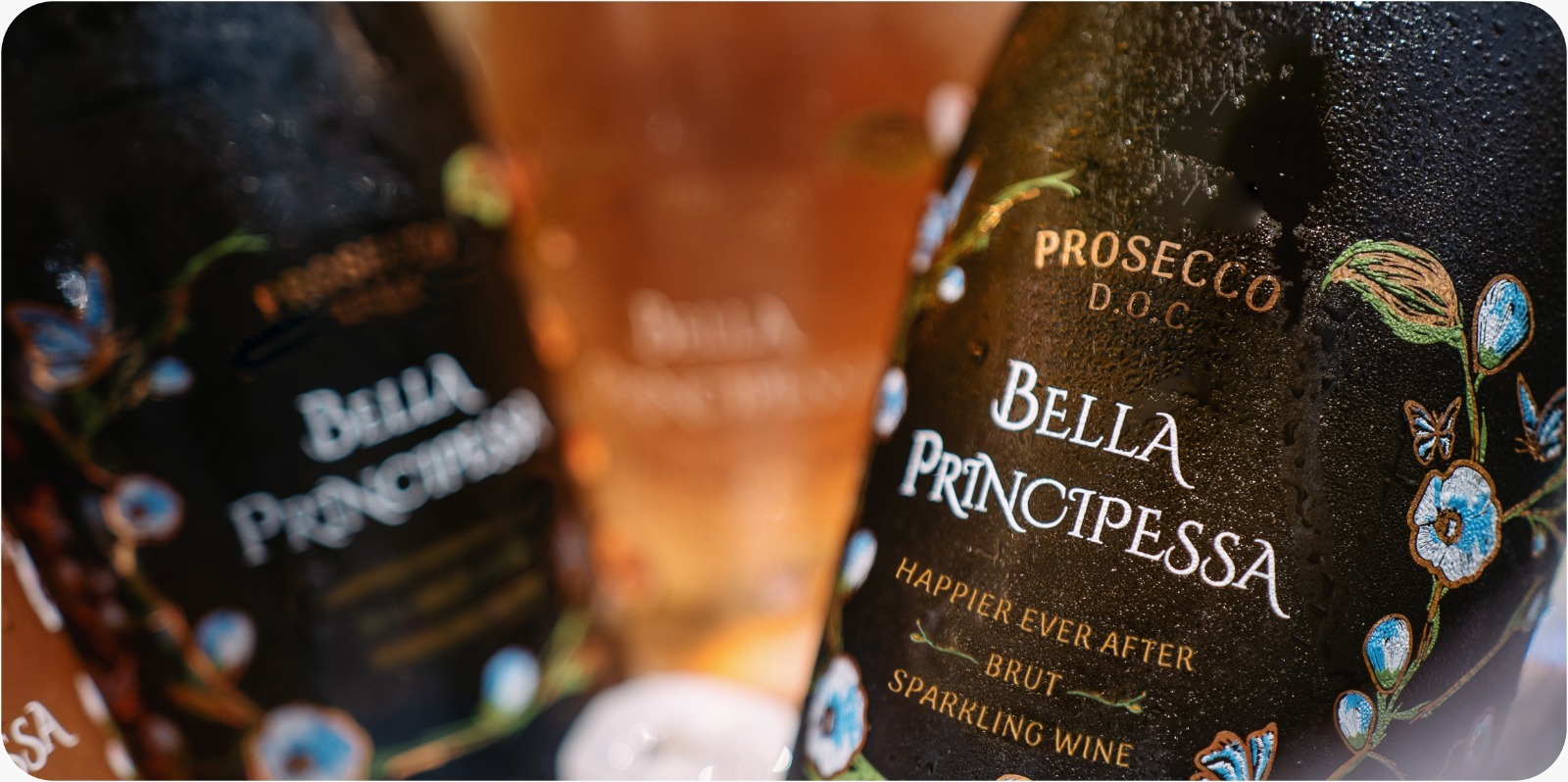
Bella Principessa Prosecco
Bella Principessa Prosecco DOC and Bella Principessa Prosecco DOC Rosé, both Brut, in a hand-painted bottle. Made by the team behind this site.
Meet Bella Principessa Where to buy Prosecco in the USQuick answers
Is Prosecco made like Champagne? No. Champagne's second fermentation happens in each bottle. Sparkling Prosecco's happens in a large pressurized tank, by law.
What is the Charmat method? A way of making sparkling wine by running the second fermentation in a sealed steel tank, then filtering the wine and bottling it under pressure. Italians call it the Martinotti method.
How long does it take to make Prosecco? The second fermentation lasts at least 30 days for Prosecco DOC and at least 60 days for the rosé, according to the Consorzio.
What is col fondo Prosecco? The traditional style, fermented in its own bottle with the yeast left in, so it's often cloudy. Look for rifermentazione in bottiglia or sui lieviti on the label.
Sources
- Consorzio Prosecco DOC: winemaking, technical sheet for sommeliers (production split) and Prosecco DOC and Prosecco DOC Rosé information sheet (Glera)
- Prosecco DOC disciplinare, consolidated to DM 19 June 2023 (AIS copy)
- Conegliano Valdobbiadene Prosecco DOCG disciplinare (AIS copy) and the 2019 amendment, Official Journal C 374 of 5 November 2019 (sui lieviti)
- Regulation (EU) No 1308/2013, Annex VII Part II (pressure definitions)
- Club Oenologique, "How the Martinotti method took Prosecco to the next level"
Last checked: October 2026
The Prosecco Desk: the Proseccotists behind Bella Principessa Prosecco. We love this region and write about it plainly. No producer pays to be mentioned.
Featured Prosecco

Bella Principessa Prosecco
Best Prosecco Rosé

Bella Principessa Prosecco
Best Prosecco DOC

Signorina Prosecco
Write a comment
Post a Comment